
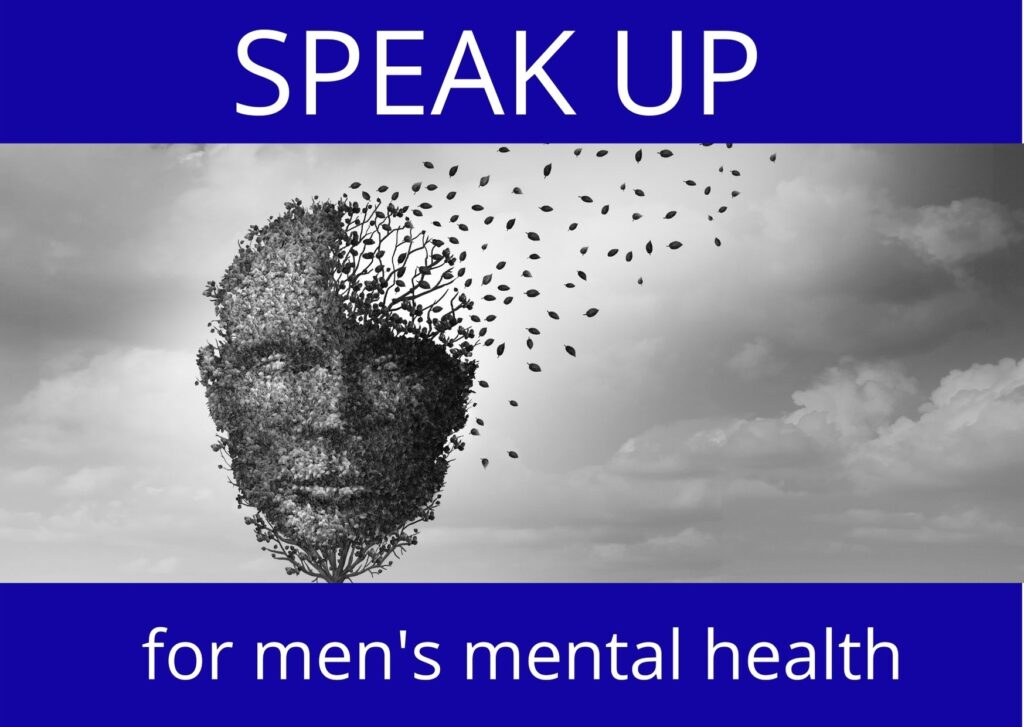
A report commissioned by The Work Foundation states that men, relative to women are reluctant to express concerns about their mental health and engage with professional help. It confirms that they are also significantly more likely to engage in risky healthy behaviours, eg. Alcohol and drug abuse, and are disproportionately affected by suicide.
They are less likely to visit a GP, attend an NHS health check, get screened for iv cancer, visit a pharmacy or have a sexual health test. The report confirms they are also less likely to seek help for a mental health problem.
A report commissioned by The Work Foundation states that men, relative to women are reluctant to express concerns about their mental health and engage with professional help. It confirms that they are also significantly more likely to engage in risky healthy behaviours, eg. Alcohol and drug abuse, and are disproportionately affected by suicide.
They are less likely to visit a GP, attend an NHS health check, get screened for iv cancer, visit a pharmacy or have a sexual health test. The report confirms they are also less likely to seek help for a mental health problem.
One in four people experience a mental health problem each year. Research indicates that 91%of ambulance staff have experienced stress, low mood or anxiety while working in the service.
It is really important for you to access help, should you wish to discuss a mental health issue, support and reliable information can make a real difference, further information is available through NHS Employers by completing their Head-first resource which is a free mental wellness resource designed for the ambulance service.
In addition, NHS employers have also developed a “How are you feeling?” NHS toolkit which aims to:
- Help bridge a gap in understanding and enable you to talk openly and regularly about emotional health
- Assess the impact emotional wellbeing has on yourself, your colleagues and on your patients
- Enable you to action plan to enable more good days than bad.
Emotional wellbeing can be explained in three ways:
- On a go slow
- Having a good day
- On the edge
Why don’t use start using the toolkit to check your own wellbeing or speak to and support your colleagues with their emotional wellbeing.
If you feel like your mental health is suffering or you are able to recognize this in a colleague, it is really important to ask for help, which we know can be more difficult for men. As a Trust, we have trained a high number of employees in Mental Health First Aid to ensure we are able to provide ongoing support.
As you will be aware, research undertaken by AACE has shown that the risk of suicide amongst male paramedics was significantly higher than the national average. The Mental Health Foundation have also confirmed that suicide is the leading cause of death among young people aged 20-34 years and it is considerably higher in men. Therefore, it is really important that the necessary support is provided.
Help and support is available from many areas, if you find that you can’t keep yourself safe right now, seek immediate help:
- Go to any hospital A&E Department
- If necessary, ask someone to contact 999 for you or take you to A&E immediately
If you need support immediately, but don’t want to go to A&E, here are some other options for you to try:
- Contact the Samaritans on freephone 116 123, they’re open 24 hours and are there to listen
- Contact your GP for an emergency appointment or the out of hours team
- Call NHS 111
- Contact your local crisis team
- Mind offer “I need urgent help” – click here for more options
- Mind also provide a page on helping yourself cope right now, as well as crisis services
If you are worried about a colleague, Mind, also offer advice on supporting someone else with suicidal feelings.
Websites
NHS Grampian Staff Self Help Resources
Whilst we will all experience anxiety and stress during this uncertain time, many of us will be able to self-manage this by accessing specific mental advice during the coronavirus outbreak which is available online at NHS 24 and NHS Inform and Turas Learn.
You can also contact the operational HR hub on 01224 552888 for any terms and conditions queries.
Breathing Space, open up when you are feeling down
We are a team of self-help coaches and therapists, offering appointment-based telephone support based on cognitive behavioural therapy.
Silver Cloud: Space for Healthy Minds
We design programmes to fit into your life. Based on years of clinical research, our methods are proven to help you feel better.
Every Mind Matters
NHS website with practical advise to help handle stress. There are plenty of things you can do to help cope with stressful events, and simple steps you can take to deal with stress.
Mind: How to Manage Stress
This website explains what stress is, what might cause it and how it can affect you. Includes information about ways you can help yourself and how to get support.
Papyrus, prevention of young suicide
Suicide is the biggest killer of young people under 35 in the UK. Every year many thousands more attempt or contemplate suicide, harm themselves or suffer alone, afraid to speak openly about how they are feeling.
PAPYRUS is the national charity dedicated to the prevention of young suicide.
Mental Health Foundation
This website provides advice on how to manage and reduce stress.
NHS Stress Busters
10 stress busters from the NHS
Rethink Mental Illness
If you feel that you cannot cope with the pressures you are under, you might be stressed. This section explains the common symptoms and causes of stress. It also looks at some of the ways you can try to reduce stress.
62 Stress Management Techniques, Strategies and Activities
What happens when we continue “burning the candle at both ends” until we reach physical and emotional exhaustion? Just like the candle itself, we risk burning ourselves out.
Useful Documents
click links below to download
Mobile Apps

Breathe2Relax
Smartphone app with instructions and exercises in diaphragmatic breathing, a documented stress-management skill. Includes detailed information on the effects of stress on the body.
Happify
A brain-training app based on research showing that some types of activity can help you combat negativity, anxiety and stress while fostering positive traits like gratitude and empathy
Relax Lite: Stress Relief
De-stress with our guided breathing and meditation exercises that use calming music to promote relaxation. It’s an ideal stress management tool, being simple and intuitive.
Podcasts

The Mindful Podcast
The Mindful Podcast helps you achieve this state of mindfulness. The episodes are fairly short, containing either 10 or five-minute practices to try out from topics such as taming bad habits or feeling grateful.
Untangle
The Untangle podcast. It focuses on real people who have used meditation to change their lives, as well as experts who want to help others learn and practise meditation.
Personal Zen
Developed with a professor of psychology and neurosciences, a series of games based on clinical findings about methods for reducing anxiety levels.
 Reach us on WhatsApp